Pulse Now
2025
Planetary Sensing · Embodied Interfaces · Planetary Rhythms

What does it feel like to belong to a planetary-scale system? How can a single bodily gesture bridge the gap between human time and planetary rhythms?
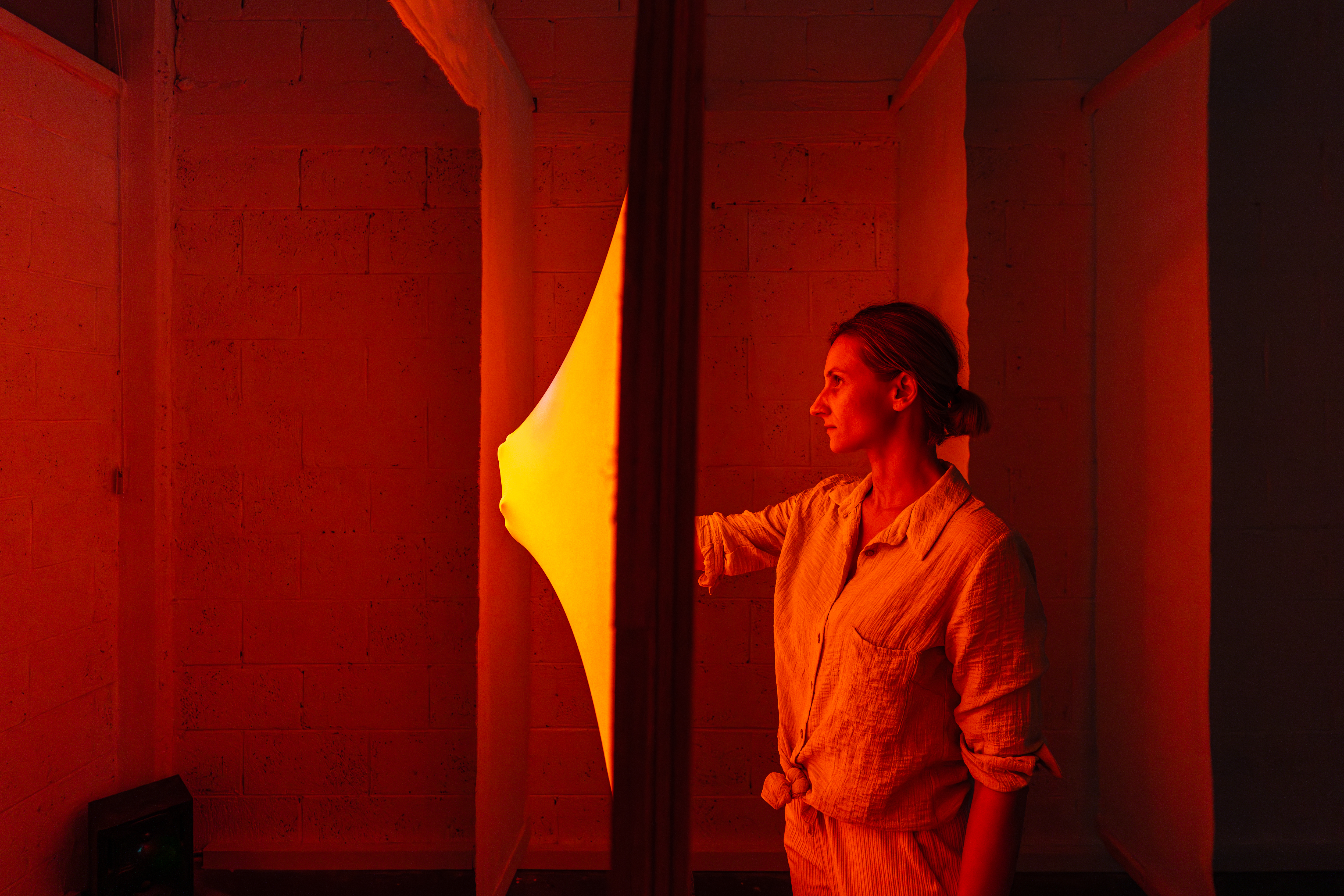
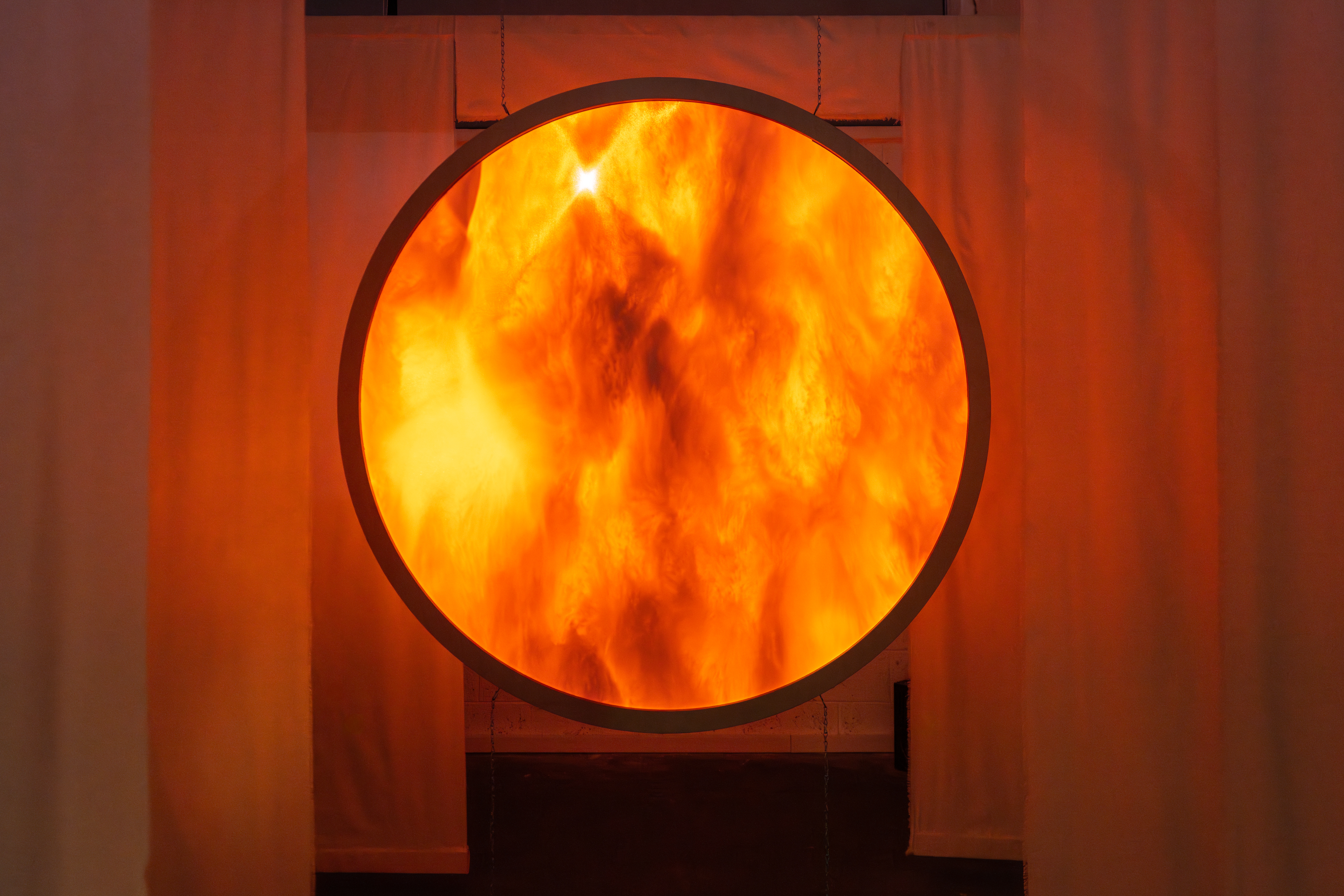
Pulse Now doesn't ask users to monitor their bodies. Instead, it invites them to place one hand on a circular interface and sustain pressure, anchoring themselves to live solar data and Schumann-based sound frequencies. The result is a feedback loop where the user does not control the system, but attunes to it.
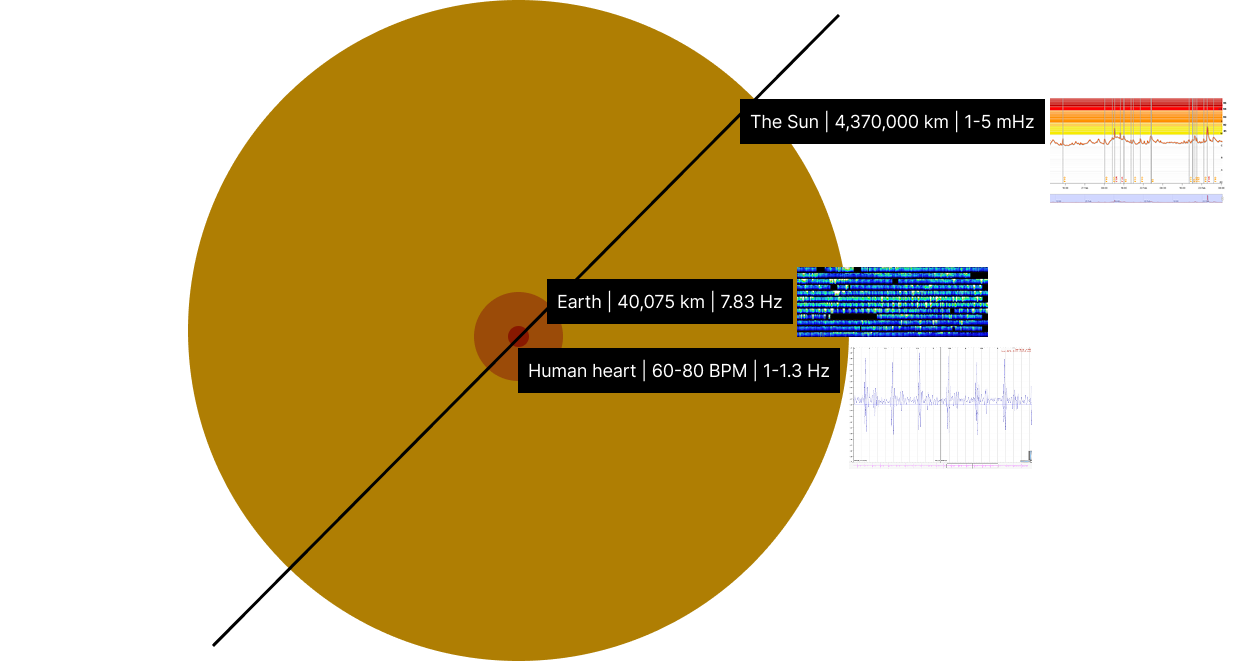
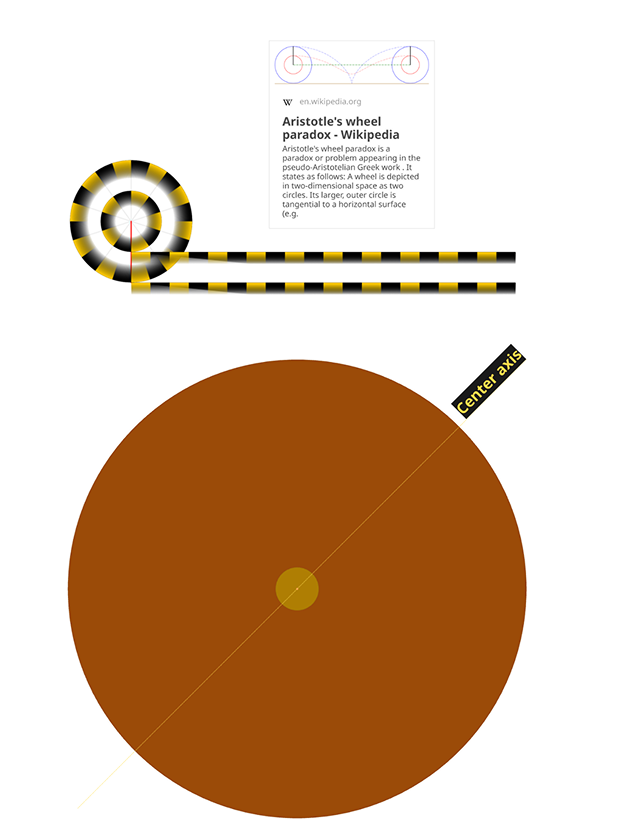
Drawing on Aristotle's Wheel Paradox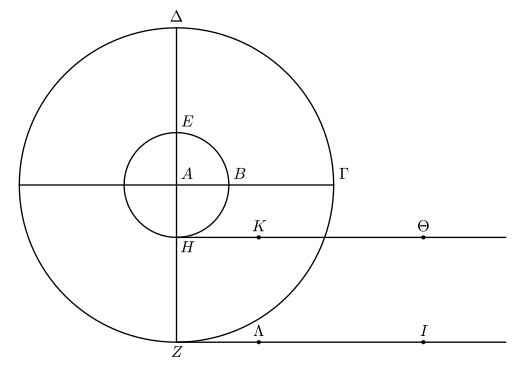 , the work asks how the finite human body (the smaller circle) can align with, and move alongside, vast planetary cycles (the larger circle) by anchoring to a shared axis. Instead of extracting data from the body, the installation asks how the body can sense its alignment with larger oscillatory fields.
The Experience
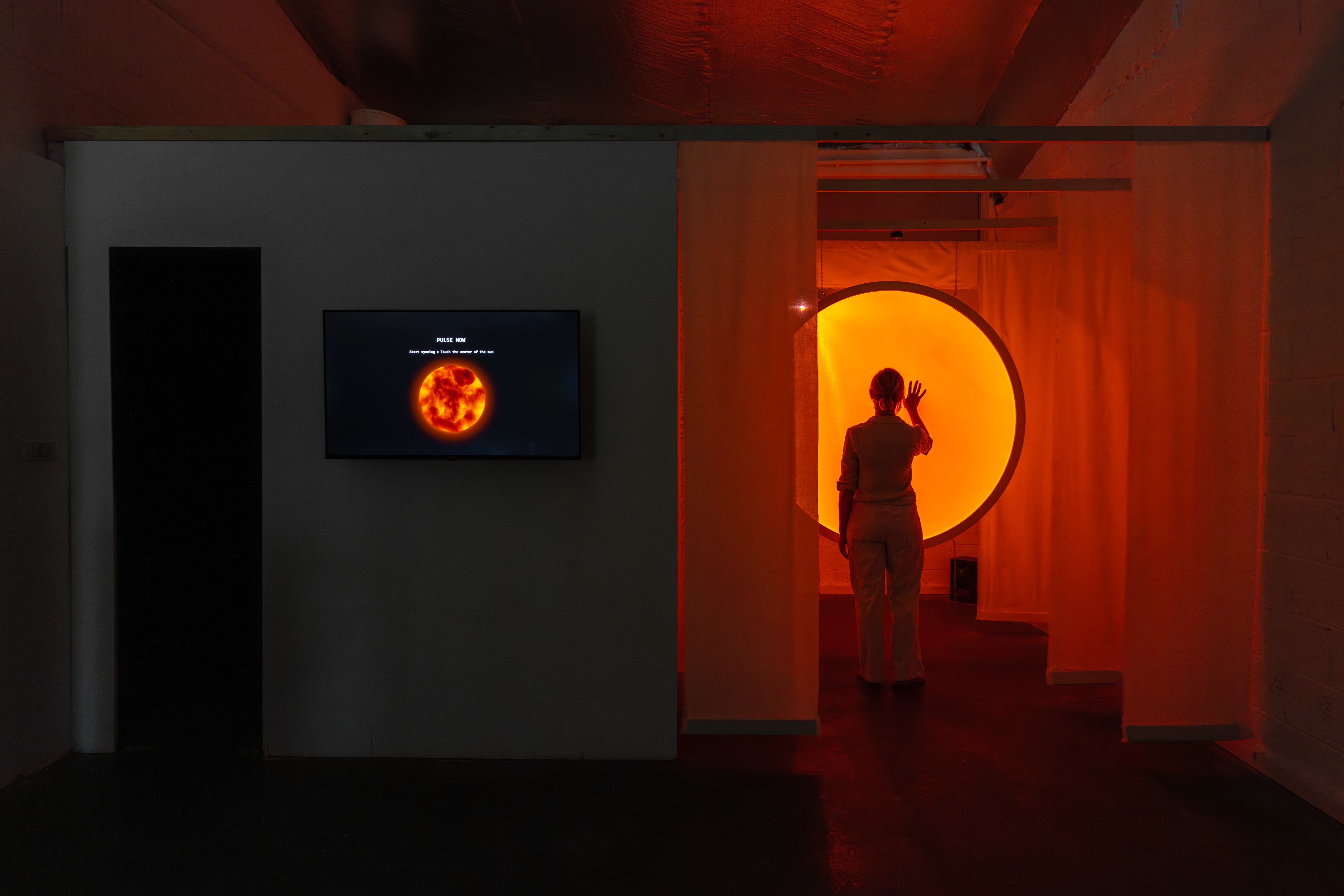
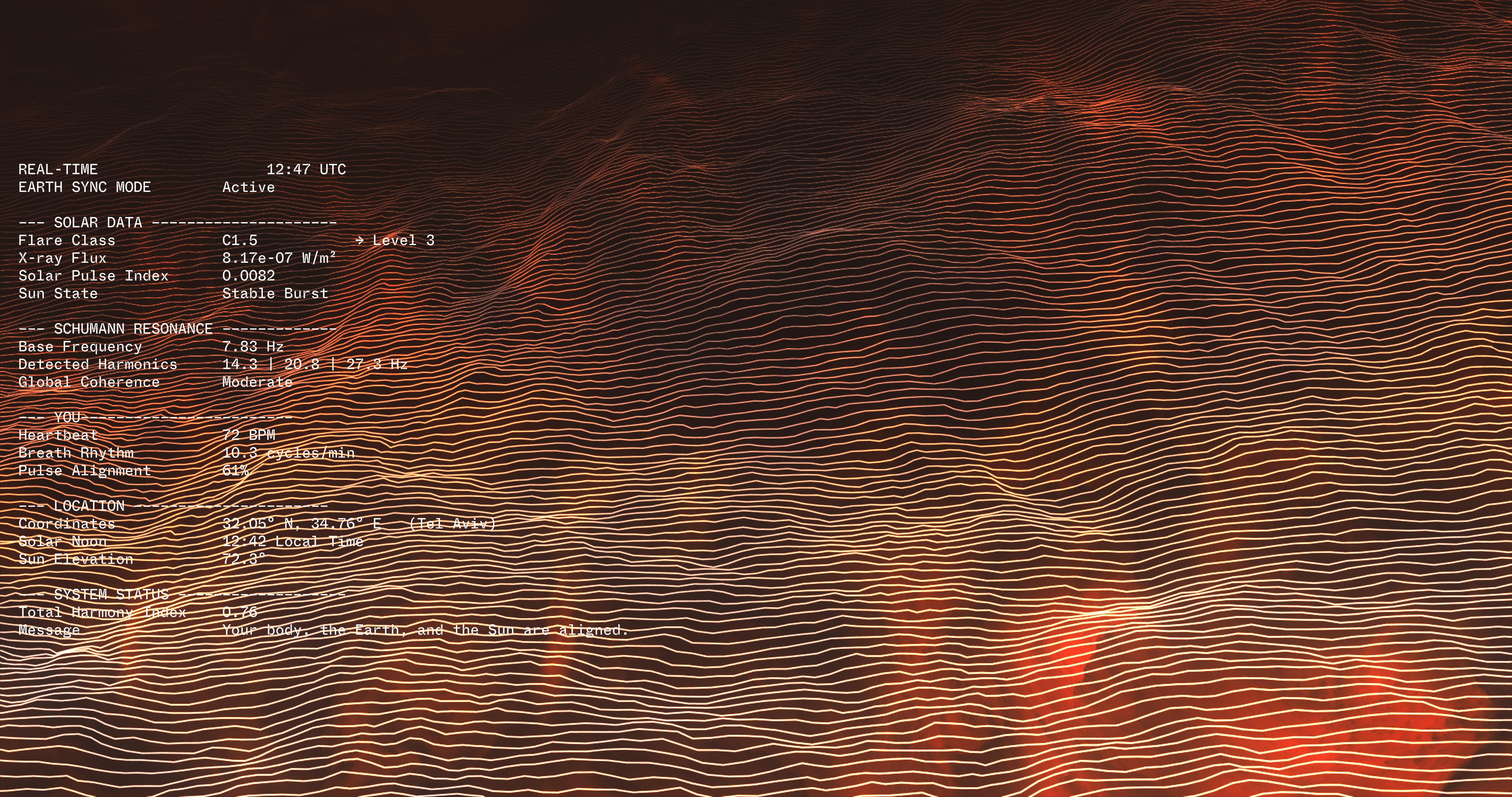
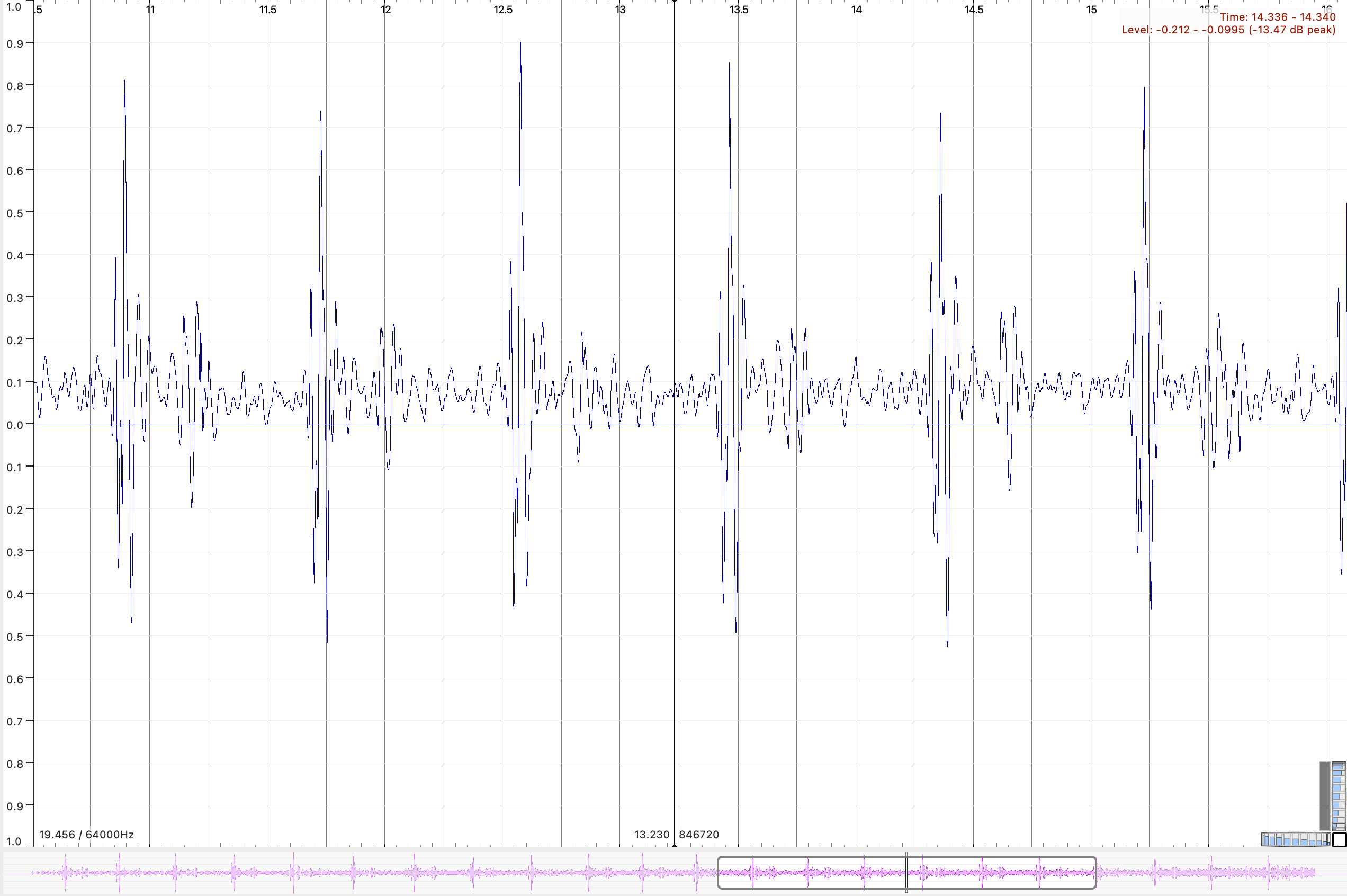
The space is filled with a low-frequency ambient drone derived from live solar wind data and the Schumann resonance (7.83Hz). A side monitor displays these raw data streams in real-time, providing context, while the central interface invites visceral engagement.
Activation: Placing a hand at the center introduces a new rhythmic pulse into the room—an experiential "heartbeat" that counters the ambient drone.
Immersion: As the user sustains physical pressure, the environment responds: lighting shifts temperature and sonic textures deepen, creating a feedback loop of presence.
Synchronization: The interface acts as a frequency clock. It measures the temporal alignment between the user's sustained gesture and the external planetary rhythm. At the conclusion, the system displays a "Synchronization Score" (percentage), quantifying the resonance achieved during the session.
Video
Images
Technical Architecture
• Sensing: Depth-based gesture recognition (not biometric)
• Data Sources: Live solar flare classification (NOAA/NASA), X-ray flux, Schumann Resonance (7.83Hz harmonics)
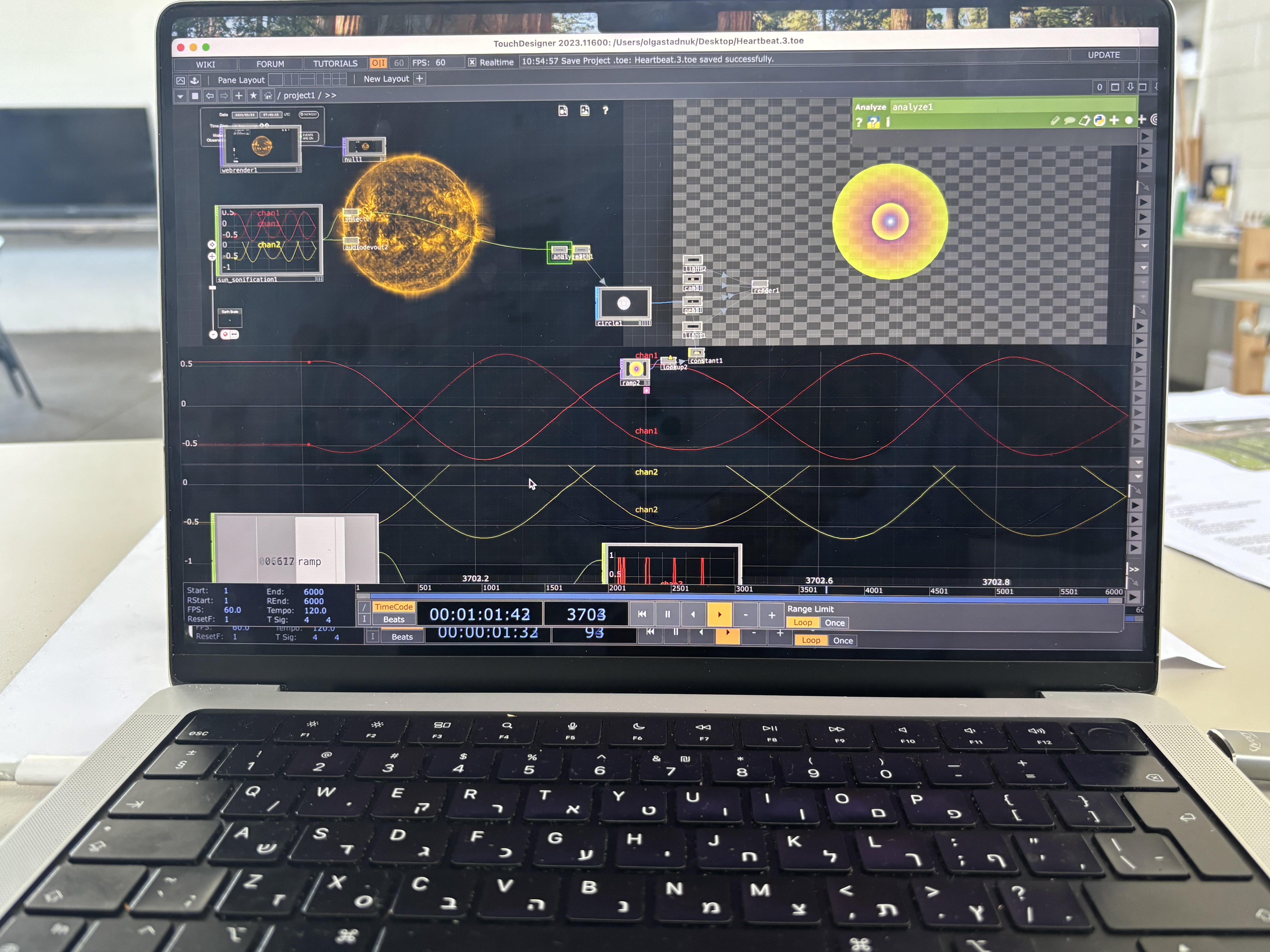
• Visual System: TouchDesigner (Generative field rendering)
• Audio: Procedural soundscape based on solar wind + Schumann frequencies
• Hardware: Custom circular interface, motion sensor
Trajectory & Future Research
Pulse Now will be exhibited at the Design Museum Holon in summer 2026, serving as a site for longitudinal observation of audience engagement.
Crucially, this project establishes the foundation for my proposed research. Having validated that intentional gesture creates stronger embodiment than passive sensing, I aim to expand this inquiry from individual interfaces to collective, multi-user environments (see Single Body, Many) that facilitate group synchronization.
Visual Archive

← Scroll horizontally to explore →
Credits
Concept, research, and installation: Olga Stadnuk
Developed during: Rothschild Residency, 2025
Sound: Nir Jacob Yonessi
Photography & Video: Daniel Hanoch